How Do I... Preserve Family History as the Sandwich Generation?
Almost half of adults in their 40s & 50s are caring for aging parents while still raising or supporting their own kids. This guide offers realistic, low-effort ways for sandwich generation caregivers to capture family history without adding another task to the list.

How Do I Preserve Family History When I'm Already Stretched Thin as the Sandwich Generation?
You drove your mom to her cardiology appointment this morning, picked up a prescription on the way home, helped your daughter study for a test you don't remember being this hard, and somewhere in there you noticed your dad telling the same story about his Navy days that he has told a hundred times. You thought, someone should really record that. Then the moment passed, because there was dinner to make and an inbox to deal with and your mom called again about something with her insurance.
If this sounds familiar, you are not alone, and you have a name, whether you chose it or not. The Sandwich Generation describes adults, mostly in their 40s and 50s, who are caring for aging parents while also raising or supporting their own children. Some people call it the Club Sandwich when there are even more layers: grandkids, aging parents, and sometimes adult children still at home, all needing something from you at the same time.
According to Pew Research Center, nearly half of adults in their 40s and 50s have a parent age 65 or older while also raising a young child or financially supporting an adult child, and roughly 23% of all American adults fall into this caregiving category. Source: Pew Research Center, via Sandwich Generation overview on Wikipedia
If you're reading this while waiting in a parking lot between appointments: preserving family history doesn't have to be one more project competing for your attention. It can happen inside the caregiving you are already doing, in moments that take two minutes instead of two hours. This guide is built around that idea.
Why This Moment Matters More Than It Feels Like It Does
There is a particular kind of grief that sandwich generation caregivers describe after a parent passes away: not just the loss of the person, but the realization that an entire library of family knowledge went with them. The story behind the wedding photo nobody can place, the reason the family moved across the country in 1968, the recipe that only existed in someone's head. These things feel permanent right up until they are gone, and by then there is no one left to ask.
The time you are spending with your parents right now, even if it is mostly doctor's appointments and grocery runs, is also the last window most people get for this kind of capture. Your kids are in the room sometimes too, which means the same conversation that preserves your parent's history can connect three generations at once. That overlap is rare, and it is happening right now whether you notice it or not.
The Two-Minute Rule: Capture Inside What You're Already Doing
The single biggest barrier for sandwich generation caregivers is not interest. It is the assumption that preserving family history requires a dedicated block of time, a formal interview setup, and energy you don't have at the end of a day like the one above. None of that is true, and letting go of it is the most useful thing this guide can offer.
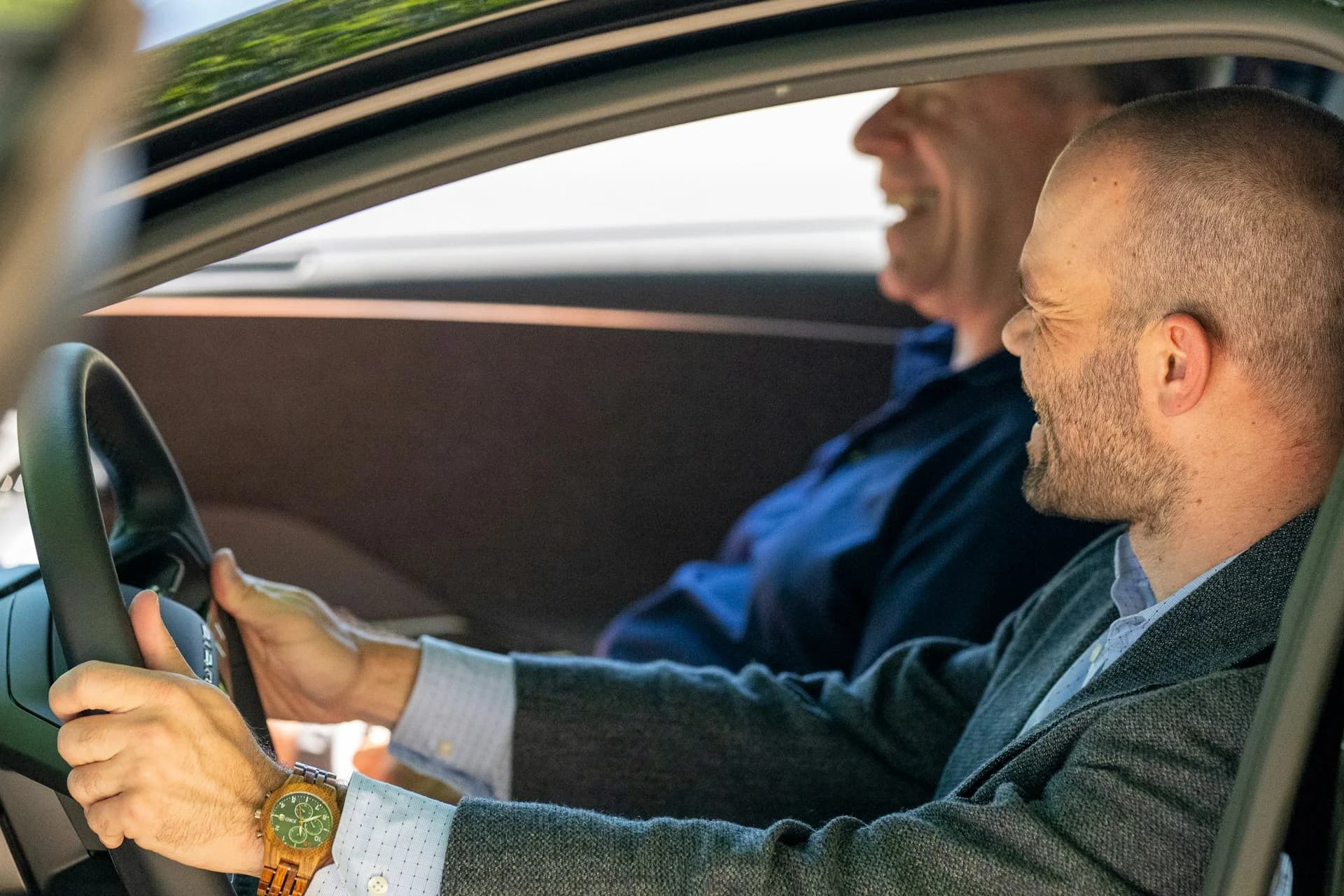
Instead, look for the moments that are already happening: the car ride to an appointment, the wait in a waiting room, the few minutes after dinner when everyone is still at the table. These are not interruptions you need to carve out time around. They are the actual opportunity, and most of them only need a phone already in your pocket.
When your dad starts telling that Navy story again, instead of half-listening while thinking about what's next on your list, pull out your phone and say "Hold on, I want to record this one." Most people are not offended by this. Many are quietly pleased that someone wants to keep it. The recording takes exactly as long as the story does, which is to say, no extra time at all.
Keep your phone's voice recorder easy to reach, whether that means a home screen shortcut or just knowing which app to tap without thinking. The barrier between "I should record this" and actually doing it needs to be as close to zero as possible, because in the sandwich generation, any extra step is a step that doesn't happen.
Waiting Rooms Are Not Wasted Time
If your life involves a lot of medical appointments, you already know how much time gets spent sitting next to a parent in a waiting room, both of you on your phones or staring at nothing. That time is genuinely useful for this.
Waiting rooms are quiet, your parent is sitting still, and there is nothing else competing for attention. This is one of the best environments for a short conversation, not because it's comfortable, but because it removes every other distraction. Ask one question. Just one. "What was Grandma like when you were a kid?" or "What did this hospital look like the first time you came here?" if it is a place they have history with. Let the answer take however long it takes. You don't need to fill the silence or ask a follow-up. Sometimes the best stories come after a pause that feels too long.
Bring Your Kids Into It Without Making It a Project
One genuine advantage of the sandwich generation position is proximity. Your kids and your parents are both in your orbit, often at the same time, which is not something every family gets. The temptation is to think this needs to be organized into a formal intergenerational activity. It does not.
If your teenager is in the car when grandpa starts a story, that is the moment, not a missed opportunity to plan around later. Let your kid hear it. If they are curious, let them ask the follow-up themselves. Kids often ask things adults have stopped asking because the adults already think they know the answer, and a grandchild asking "wait, you did what?" can pull out an entirely different version of a story than the one the adult children have heard a hundred times.
If your kids are older, even a casual mention works. "Grandma told me something wild about the year she got married, want to hear it?" turns a recording you made in the car into something that connects your kids to a person and a time they otherwise would only know as photographs.
When Things Get Heavier: Capturing During Decline
Not every season of caregiving involves a parent telling stories with energy and clarity. Sometimes you are caregiving through cognitive decline, and the windows for capturing coherent memories get smaller and less predictable. This is harder, and it deserves to be said plainly: there is no version of this that makes that easier.
What can help is lowering the bar even further. A good day, even a short one, is worth catching. If your parent has a clear moment, even for five minutes, that is enough for one question and one answer. Don't wait for a better day that might not come, and don't feel like a partial story is not worth having. A fragment of a memory, recorded while it was still accessible, is worth more than the polished version you wished you had captured years earlier.
It's also worth recording your own observations during this time, even if your parent cannot. What they responded to, what made them smile, small details about how they are doing. These become part of the family record too, and they matter to the version of this story that your kids and grandkids will eventually want to understand.
Questions That Work When You Have No Time to Plan
The best questions for this kind of capture are the ones that do not require preparation. They work in a car, a waiting room, or at a kitchen table with five minutes before someone needs to leave.
No-Prep Questions for In-Between Moments
What's something you did as a kid that would get a kid in trouble today?
What was the first job you ever had, and what did it pay?
What's a smell or a song that immediately takes you back to being young?
Who was the funniest person in your family growing up?
What's something you wish you had asked your own parents before they were gone?
What do you remember about the day I was born or the day we met?
Notice that last question works for parents and grandparents alike, which means the same prompt can generate completely different answers depending on who you ask, and that contrast is its own kind of family history.
Where It All Goes So It Does Not Become Another Thing to Manage
Here's where a lot of well-intentioned recordings disappear: scattered across someone's phone, in a Voice Memos app nobody else has access to, named New Recording 47, with no plan for what happens to them. For sandwich generation caregivers already managing more moving pieces than anyone should have to, adding "figure out a system for these recordings" to the list defeats the purpose.
This is exactly the situation My Family Story Vault is built for. One subscription covers the whole family, so your parents, your siblings and your kids can participate freely. Everyone invited can add to the same Tribute page for a specific person, your mom or your dad, with the voice recording from the car ride sitting alongside a relevant photo and whatever your sibling adds from their side, all organized around that person rather than scattered across everyone's individual phones, tablets or laptops.
For someone juggling two generations at once, the value is not just preservation. It's that the recording you made in a waiting room becomes immediately useful to everyone else who loves that person, without you having to do anything else with it.
Start With the Next Car Ride
You don't need a plan, a project or a free weekend that doesn't exist. The next time you're in the car with a parent, or sitting with them in a waiting room, or at the table after dinner with your kids still around, that is the moment. Pull out your phone, ask one question from the list above or one of your own, and let it run for as long as it runs.
You're not adding a task to your day. You're turning a moment that was already happening into something that will still matter long after this particular season of life, with all its appointments and homework and phone calls, has passed.
Need Some Further Inspo?
If you're ready to begin, but still not quite sure about the right questions to ask your loved one, we totally understand. That's why we created our free Story Question generator. Get a tailored list of thoughtful questions that will unlock great stories from your loved one!
✨ Join thousands preserving family stories • 🔒 Secure & Private
🆓 Start Today