How Do I... Capture Family Memories at the Holidays?
Most families gather for the holidays, but let the real stories slip by unrecorded. This guide shows how to turn Father's Day, Día de Muertos, Thanksgiving, Hanukkah, Diwali, Eid & every gathering in between into a simple, repeatable tradition for capturing family memories that actually last.

How Do I... Capture Family Memories at the Holidays?
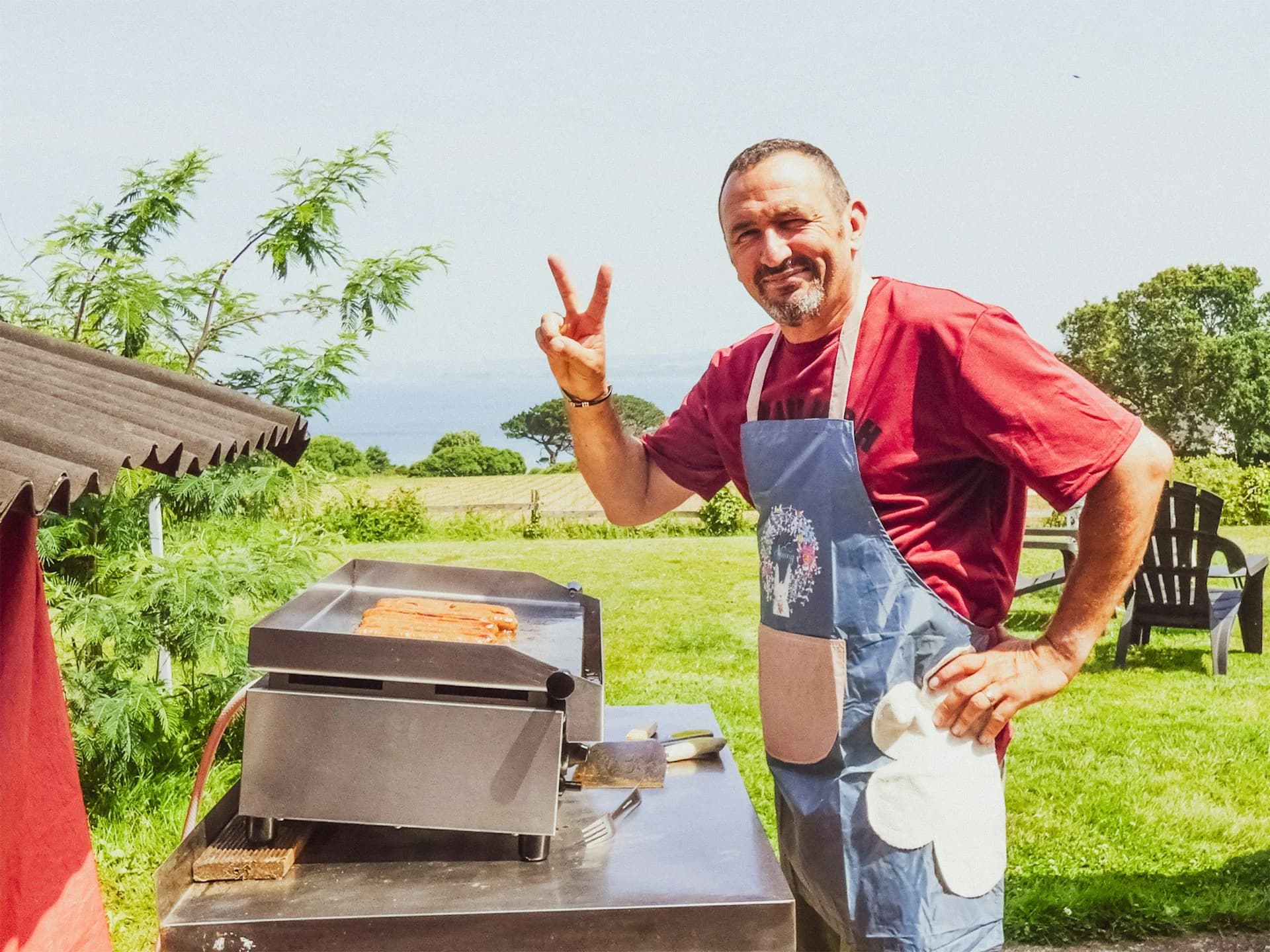
Father's Day is fast approaching, and if your family follows the usual pattern, here is roughly what will happen. Everyone shows up. There is food. A few photos get taken. Someone says something funny or unexpectedly moving, people laugh or tear up for a moment, and then the afternoon moves on. A week later, you can't quite remember the exact words. A year later, the feeling is still there, but the story has blurred.
That moment didn't have to disappear. Holidays are genuinely the best opportunity most families have to capture real stories, not because they are formal occasions, but because the opposite is true. The people who hold your family's history are relaxed, fed and in a nostalgic mood. The conditions for a good story are better on a Sunday afternoon at a backyard barbecue than they will ever be in a scheduled sit-down recording session.
The problem is not that families don't care. It's that no one planned for it. Planning isn't as hard as it sounds.
Why Holiday Gatherings Produce the Best Stories
Think about what a holiday gathering gives you that an ordinary day does not. Multiple generations in one place. A shared reason to be there. Enough time to linger after the meal. And, critically, grandparents and older relatives who are already in a reflective mood. They are thinking about the past because the holiday itself prompts it.
Father's Day in particular centers the conversation on someone who is often reluctant to talk about himself. That is actually useful. He is not being asked to sit down for an interview. He is just at a picnic table with his family, and someone asks him about his first job. The informal setting lowers the resistance. Stories come out in kitchens and on back porches that would never come out anywhere else.
According to a 2025 AARP survey of adults age 50-plus, 63% of grandparents have not recorded their stories, yet 73% say they would use technology to capture them if it were available. The desire is there. The follow-through is the gap. Source: AARP Research, September 2025
Every holiday that passes without capturing anything is a missed window. The goal isn't to record everything or turn gatherings into documentary shoots. It's to build a few small habits that quietly accumulate into something your family will be grateful for in twenty years.
Start This Father's Day: Seven Questions Worth Asking
You don't need to announce that you are preserving family history. Just ask one good question and see where it goes. The questions that tend to work best are specific enough to prompt a real answer, but open enough to go somewhere unexpected.
Questions to Ask the Dad or Grandfather in Your Life This Weekend
What was the first car you ever owned, and what happened to it?
What did a typical Saturday look like when you were ten years old?
What is one thing your own father taught you that you have never forgotten?
What was the hardest year of your life, and what got you through it?
What do you remember about the day I was born?
Is there a decision you made that changed the direction of your life?
What do you want the grandkids to know about you that they probably don't know?
That last one tends to land differently than the others. It signals genuine interest, not just polite conversation, and it gives permission to say something that might not come up otherwise. If your dad or grandfather is a talker, one question might carry you through the whole afternoon. If he is more reserved, ask it, listen, and follow his lead. Either way, have your phone recording everything!
Three Simple Traditions You Can Start Today
The traditions that actually stick are the ones that require almost no setup. Here are three that fit naturally into gatherings you are already having.
The One-Question Round
Before or after the meal, one person asks everyone at the table the same question. It can be lighthearted or reflective: "What's your earliest memory of this holiday?" or "What's something you are proud of this year?" You go around the table, everyone answers, and someone records it on a phone set in the middle. That is the whole tradition. Done consistently, year after year, it becomes part of the holiday itself. The recordings you have from five years ago of someone who is no longer with you will eventually be the most valuable things you own from that day.
The Photo With a Story
Everyone photographs holidays. Almost no one writes down what was actually happening in the frame. A picture of your dad laughing is nice. A picture of your dad laughing because your nephew said something completely ridiculous, with that story written in the caption, is something your family will pass around for generations. Before you put your phone away after a holiday gathering, add one sentence to your favorite photo. Not a description of what is in the shot. The actual story behind the moment.
The "Tell Me About" Opener
This one works especially well with grandparents. Instead of yes-or-no questions, start every prompt with "Tell me about..." and let them finish it. "Tell me about the house you grew up in." "Tell me about how you two met." "Tell me about the first holiday you remember." The open-ended structure almost always produces a story rather than a one-sentence answer, and it feels like a conversation, not an interview.
Ask before you record. A simple "Do you mind if I keep this?" is enough, and most people are genuinely touched that you thought their story was worth saving. It also tends to make them talk more openly, not less.
The Same Approach Works at Every Holiday
Father's Day is the immediate opportunity, but the habit carries forward. Fourth of July gatherings are long and relaxed, which creates natural downtime for conversation. Thanksgiving is built around gratitude and gathering, which makes it the easiest occasion to introduce the one-question round. Christmas and Hanukkah gatherings tend to center on objects with their own stories: an ornament from another country, a menorah passed down through generations, a dish that only appears once a year (I'm looking at you lime-pear jello 👀). Those objects are story prompts in plain sight.
Día de Muertos may be the most directly memory-focused holiday of all. It is already built around honoring those who have passed, so families gathered for it are already in the mindset of remembering. Ask someone to describe a specific memory of a person on the ofrenda, or to put into words one thing about that person that no photograph has ever captured. Those answers belong preserved alongside the photos from the day.
Eid al-Fitr and Eid al-Adha bring extended family together in ways that happen only a few times a year, and the celebrations carry deep personal history. Ask an elder what Eid looked like when they were growing up, what foods were prepared and by whom, or what the holiday meant to their own parents. The answers often reach back several generations in a single conversation, surfacing details about family origin and migration that have never been written down anywhere.
Diwali, celebrated by hundreds of millions of Hindu, Sikh, Jain and some Buddhist families worldwide, is a five-day festival of lights that carries extraordinary storytelling weight. The legends behind the holiday vary by region and community, and those variations are stories in themselves. Ask a grandparent to explain what Diwali meant to their own family when they were young, which rituals they kept, which ones changed across generations, or what their mother cooked on the night of the diyas. The answers reach back through family lines in ways that a photograph of rangoli on the doorstep never could.
Chinese New Year is layered with ritual and meaning that older family members hold in ways younger generations often do not fully know. The reunion dinner, the red envelopes, the specific foods tied to luck and family continuity: each one carries a story. A simple "Tell me what your family did the night before New Year when you were a child" can open into something far richer than the question suggests.
Whatever the holiday, the principle holds. The gathering is already happening. The only question is whether the stories that surface during it get saved or quietly disappear.
This is true regardless of which traditions your family observes. Every culture, every background, every corner of the world has built its own rhythms of gathering, its own foods and rituals and reasons to bring people together across generations. What they all share is the same quiet risk: that the stories carried by the oldest people in the room will leave with them if nobody thought to ask. The holidays are simply the best natural invitation to ask.
What to Do With What You Capture
Recording a story is only half the job. A voice memo sitting in someone's phone for three years, unlabeled, is nearly as lost as a story that was never recorded. Label things while the details are still clear. Connect the recording to the photos from the same gathering so the voices and the faces live together. And make sure the people who were there can actually find and add to what you saved.
That last part is where most families fall short. One person captures something, it lives in their phone, and everyone else never sees it. The story is preserved for one person instead of the whole family.
My Family Story Vault was built around a different idea. Each subscription lets you create a Tribute page centered on a specific person: a dad, a grandfather, a grandparent you want to honor. You invite family members and close friends at no extra cost, and everyone contributes to the same digital space. The Tribute is organized around that person's life events, and Holidays can fit right in. So the One-Question Round answers from Father's Day 2026 can live under the Holidays milestone as a Father's Day 2026 story on Dad's Tribute page, alongside the photos from that afternoon and anything else the family adds. It's not a catch-all archive for every piece of media everyone in the family has ever taken. It has a purpose and a person at its center, which is what makes it something people actually return to.
This Father's Day, ask one question. Record the answer. Start the Tribute. Everything your family adds from there builds something that will still exist and still matter long after the afternoon is over.
Try Our Free Story Question Generator
Sometimes you just need a little help to get started. Our free Story Question generator will give you a list of thoughtful questions to ask that will unlock some amazing stories from your loved one!
✨ Join thousands preserving family stories • 🔒 Secure & Private
🆓 Start Today