How Do I... Ask My Parent About a Childhood I Never Got to See?
Most family photos and stories start well into childhood, leaving the earliest years undocumented. This guide covers how to ask a parent or older relative about a childhood that predates every memory you've ever heard from them, using questions that work even when their own memory has gaps.

How Do I Ask My Parent About a Childhood I Never Got to See?
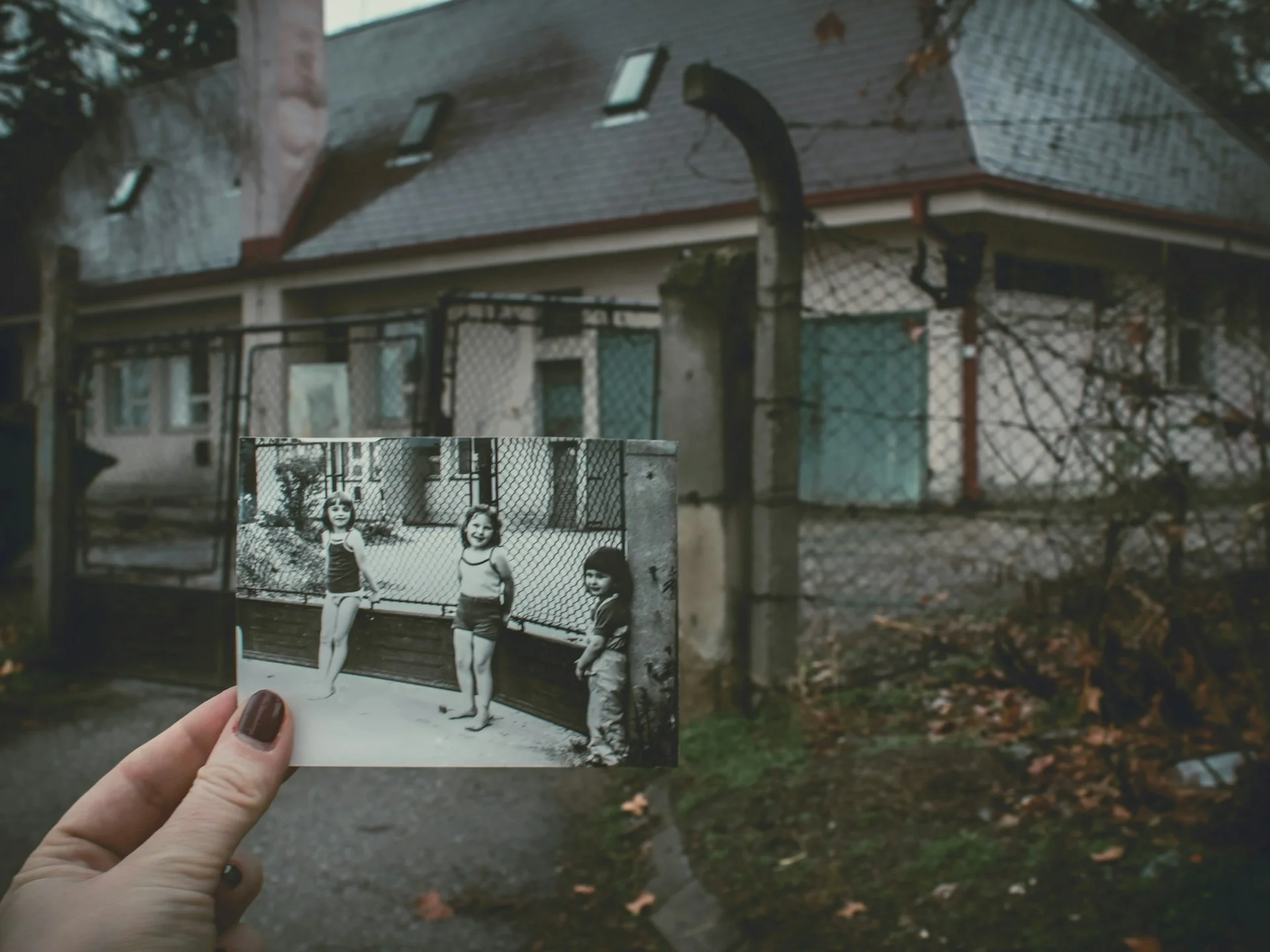
Go look at any photo of your mother or father as a kid and you'll notice that it almost never shows them younger than five or six. Baby pictures exist, sure, a handful from the hospital or the first birthday. Then there's a gap. Years pass with barely a picture to show for them, and the next bunch of photos shows a kid who's already lost a few teeth and can maybe hold a conversation. Somewhere in there is a childhood nobody ever asked about.
For an older generation, this is normal, not an outlier. Cameras (and film) were expensive back then, and toddlers move too fast for the slow shutter speeds of decades past. But the missing photos are only part of the story. There's a second, stranger reason those early years feel unreachable, and it has nothing to do with cameras at all.
Why the Earliest Years Are Hard to Ask About
Most people can't remember much before the age of three or four. This isn't a personal failing or a sign of a bad memory. It's called childhood amnesia, and it happens to nearly everyone. The brain structures that support long-term autobiographical memory aren't fully online yet in toddlerhood, so events that felt vivid at the time simply don't get stored the way memories do later on.
A 2017 review of research on childhood amnesia found that the average age of a person's earliest retrievable memory is around 3.5 years old for people in Western Europe and North America. Anything before that point is, for most people, permanently inaccessible through direct recall. Source: Medical News Today, citing peer-reviewed research on childhood amnesia
This changes your whole approach. When you ask your dad what he remembers about being two years old, you're not just asking a question he hasn't thought about in a while. You're asking him to access something that may not exist in his memory anymore. He can't retrieve it, no matter how hard he tries or how much you'd like him to.
What he can access is different, and it's just as valuable. He knows what he was told. He knows what's in the family stories that got passed down about that time. He might know a fact or two from a baby book his own mother kept. None of that is a direct memory, but all of it is real information that would otherwise disappear the moment he's no longer around to pass it on.
Ask About the Evidence, Not Just the Memory
Once you understand that direct recall has a floor, the questions change shape. Instead of asking someone to remember something they can't, ask them what they know secondhand. This reframes the whole conversation and usually gets a much richer answer than a straightforward memory question would.
"What did your parents tell you about what you were like as a baby?" is a completely different question from "what do you remember about being a baby?" The first one taps into family lore, the stories that got repeated at holidays for decades. Someone might not remember learning to walk, but they might know the story their mother told about the day they took off across the kitchen and knocked over a chair doing it. That story is a real artifact, passed down through repetition, and it carries information a direct memory never could.
Baby books and old letters from that period are also worth asking about directly. "Did your mom keep a baby book? Do you know what's in it?" can surface details that neither of you knew existed until the question got asked out loud.
Use Objects and Decades as Entry Points
Direct questions about a specific age often stall out because the person doesn't have anything to offer. A better approach uses physical objects, historical context, or family roles as a way into the same territory.
Ask about a specific object rather than a specific memory. "What was the house like where you lived when you were born?" pulls from things a person can piece together even without direct recall: what their parents later told them, what they saw in old photos of the house, what siblings or cousins have mentioned over the years. The object or place becomes a container for secondhand knowledge that a direct "what do you remember" question would leave untapped.
Historical context works the same way. If your mother was born in 1958, she can't remember 1959 or 1960. But she might know (now) what the country was going through then, and extrapolate that into what her parents were dealing with financially or what was happening in the family at large. "What was going on in the family around the time you were born?" opens up an entirely different, entirely answerable line of conversation.
Birth order changes what's knowable too. A firstborn's earliest years are often the least documented, since parents haven't yet built the habit of recording milestones. A younger sibling frequently has more photos and more family stories simply because the parents had settled into parenthood by then. If you're interviewing more than one sibling, ask each of them what they know about the others' early years. The answers often fill in gaps that neither sibling could answer about themselves.
Questions Built for the Gap
These are designed to work around the limits of direct memory rather than against them.
Questions About an Early Childhood You Can't Remember Firsthand
What did your parents tell you about what you were like as a baby or toddler?
Is there a story about your early childhood that got repeated so often you can practically recite it yourself?
What was happening in the family around the year you were born?
Do you know where your family was living when you were born, and what that place was like?
Did anyone keep a baby book, letters, or records from your first few years? What's in them?
What do your older siblings or cousins remember about you before you were old enough to remember yourself?
Is there a nickname, phrase, or habit from when you were very young that stuck with you into adulthood?
Notice none of these ask "what do you remember" directly. They ask around the memory, toward the evidence and the stories that survived it.
What to Do With an Answer That's Fuzzy or Uncertain
Sometimes the answer you get is uncertain. "I think that's what happened, but I'm not totally sure if I remember it or if I just remember being told about it." That uncertainty is worth writing down exactly as stated rather than smoothing it into something more definite than it is.
My grandmother told stories at her 100th birthday party from when she was 2-3 years old. She prefaced those stories by saying she didn't remember them directly because she was too young, but these were the stories her family had always told her about her antics!
Memory researchers distinguish between a real memory and a "memory" that's a repeated story internalized as if it were a memory. Neither one is worthless. Both tell you something true about the family, even if only one of them tells you something true about the actual event. Recording the uncertainty alongside the answer preserves that distinction for whoever looks at this material later.
Try This With Your Own Family
Every family has this same gap somewhere. A parent's earliest years, a grandparent's toddlerhood, an era that predates every photo you've ever seen of them. The questions in this guide work for any of it, but the specific relationship and specific chapter of someone's life changes which ones land best.
The Story Question Generator builds a custom set of questions matched to who you're interviewing and which part of their life you're asking about, including childhood specifically. Pick the relationship and the chapter, and get a fresh set of prompts built for that exact conversation. Try it before your next visit, and see what surfaces from the years nobody thought to ask about before.