How Do I... Document Life Milestones Before I Forget the Details?
Most people remember that a milestone happened, but the exact date, location, and sensory details fade within a year or so. This guide covers how to capture those specifics while they're still accessible, and why waiting even a little while costs more than people expect.

How Do I Document Life Milestones Before I Forget the Details?
Ask someone when they got married and they'll tell you the date without hesitation. Ask what the weather was like that morning, what song was playing when they walked in, what their grandmother said to them right before the ceremony, and the answers get slower. A few years out, some of those specifics aren't blurry. They're gone.
This happens with almost every milestone a family has. The big fact survives. A baby was born, a house was bought, someone graduated, someone moved across the country. The surrounding texture, the part that makes a memory feel like something rather than an entry on a form, disappears much faster than most people expect. Nobody plans for that. It just happens quietly, one forgotten detail at a time, until one day the whole texture of the event is gone and only the headline is left.
Why the Details Go First
Memory researchers describe this pattern as transience: the gist of an event survives, while the specific details around it decay at a much faster rate. Within roughly a year of something happening, most people can no longer reliably bring back the sensory and situational specifics, even for events they consider significant.
Research summarized in the study of memory decay notes that people generally "become incapable of bringing to mind the specifics of most of what we experience within a year or so of it happening," a pattern first documented by psychologist Hermann Ebbinghaus and later expanded on by memory researcher Daniel Schacter as one of several consistent failure modes in human memory. Source: ScienceDirect, Memory Decay
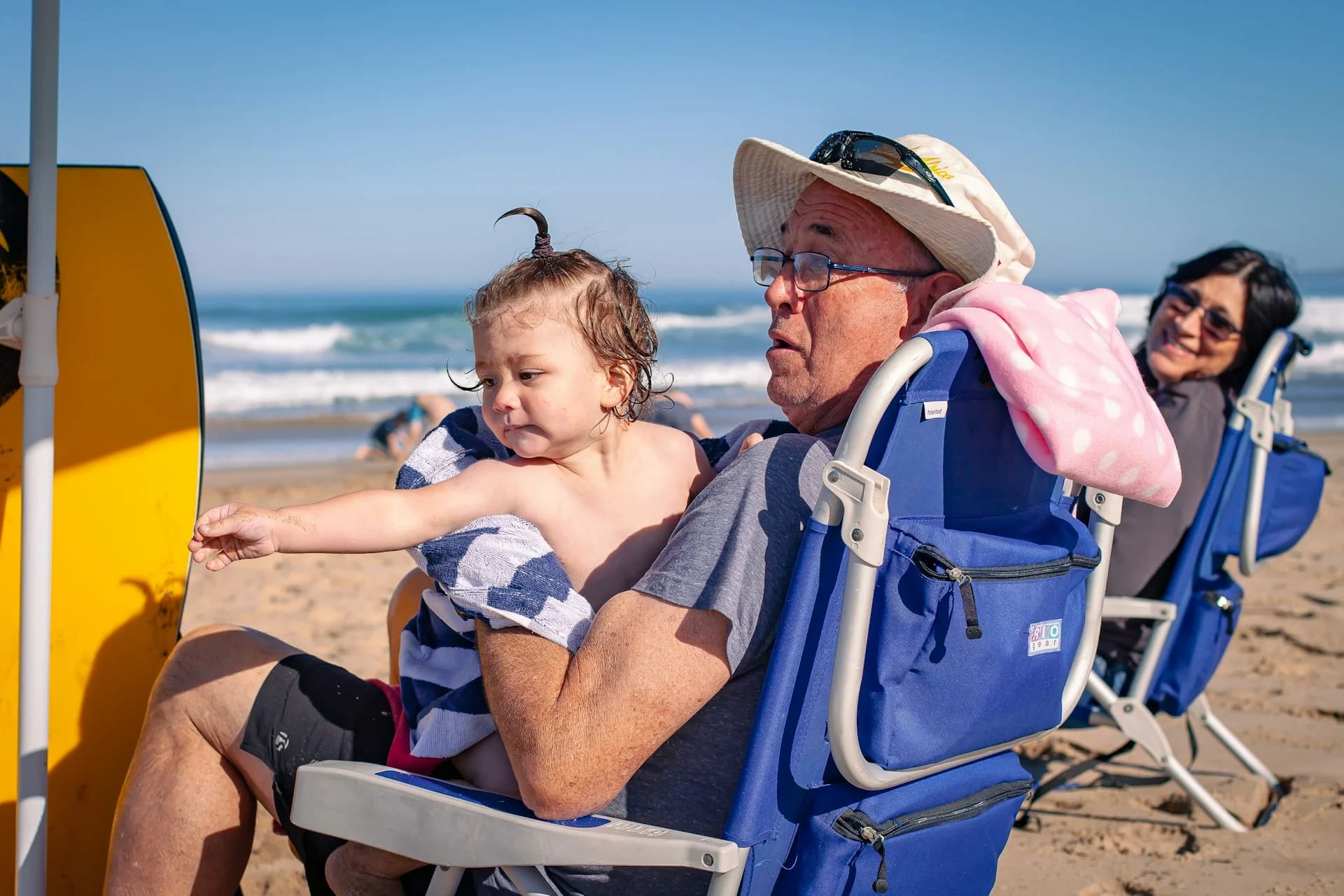
A year sounds generous until you consider how milestones get documented in most families. A photo gets taken when Grandpa took his daughter and granddaughter to the beach. Maybe a caption gets added, maybe not. The date lives in a phone's metadata or nowhere at all. Nobody sits down afterward and writes out what the day felt like, because in the moment it feels unforgettable. It won't stay that way.
What's Worth Capturing (That Usually Doesn't Get Captured)
A date and a location are the foundation. They matter, and they're the easiest part to lose sight of entirely if not written down when they happen. But the details that make a milestone worth revisiting later live in a different layer.
Who was there? And not just the obvious people, but the ones taking the photo, or someone who showed up unexpectedly, or someone who almost didn't make it. What was said? Especially anything that got repeated afterward as a family line. Did anything go wrong? Often the hiccups tend to be what people laugh about for decades while the things that went according to plan get forgotten. Were there feelings happening? Like how did it feel leading up to the moment, was there nervousness or a feeling of waiting or disbelief - these are almost always the first things to disappear from memory.
None of this needs to be written like a diary entry. A few sentences captured within days of the event will do more for future recall than a polished paragraph written six months later ever could. You're not writing a literary masterpiece, it's the timing you're after.
Capture milestones as close to the event as possible, ideally within the first week. The gist of a memory stays intact for years. The specific, textured details are the ones with the shortest shelf life, and they're usually the ones a family most wants back later.
Milestones People Forget to Document
The obvious milestones, like weddings, births and graduation parties get remembered on their own for a while. It's the smaller milestones that tend to slip through entirely, and they're often the ones a family regrets losing the most, because nobody expected them to need documenting in the first place.
A first job and what the first paycheck felt like:
After college, my friends and I celebrated whoever got their first real job with a nice dinner and drinks in downtown Chicago, paid for by that first paycheck! I remember the mariachi band and sombrero's from when it was my turn to pay, but I'm a bit fuzzy on how many margaritas we had 😎.
Or the exact circumstances of meeting a spouse, which almost always gets simplified into a shorter, cleaner version over time. A house purchase, including what the neighborhood looked like before it changed. A decision to move somewhere new, and what got weighed before making it. The day someone retired, which often gets skipped entirely since it doesn't come with a built-in celebration the way a wedding does.
These are the milestones most likely to only exist only in someone's head. There's likely no photos or obvious reasons to record them until years later, when the details have already thinned out considerably.
Milestones Worth Logging Even If They Feel Small
First apartment or first place lived alone, including who helped move and what the place looked like inside.
First car, and the story behind how it was bought or paid for.
A career change, and what prompted the decision at the time.
A friendship that turned into something lasting, and how the two people met.
The day a pet joined the family, and why that particular one.
A health scare that resolved well, before the fear of it fades into a footnote.
Building the Habit, Not Just the Record
A single milestone, well documented, is useful. A running habit of capturing milestones as they happen is what builds something a family can use for decades. The difference isn't the effort you put it, but the consistency you apply. And consistency doesn't require much once you've formed it as a good habit.
Pick a natural event that already exists in your life rather than trying to remember to do this from scratch. Some people use birthdays as a yearly checkpoint, sitting down once a year to log what's happened since the last one. Others capture things the week they happen and let the timeline fill in gradually rather than all at once. You could also use major holidays, although they can be stressful in general, so maybe start with something easier and less fraught. The approach doesn't matter as much as having somewhere the entries can be recorded, rather than having them scattering them across texts and notes apps that never get consolidated into anything usable.
This is also where documenting a parent's or grandparent's milestones works differently from documenting your own. With parents or grandparents, you're not capturing something you just lived through, so the details need to be discovered. It's a bit like detective work. You're asking someone else to reconstruct a milestone from years (or decades) in the past, and the details are already partially gone before you even start asking. Ask what they remember now, while more of it is still there than there will be in another five years. And if you have a photo from around that time, show it to them. Photos can often jog our memories and loosen up details.
Where the Timeline Comes Together
Writing a milestone down somewhere is better than having nothing written at all, but if a milestone is written down in a place designed to hold a whole life's worth of them, then it becomes much more useful over time, to many more people in your family. Scattered notes are hard to search and easy to lose. A single running timeline lets you see how a life takes shape as the entries accumulate, and it gives family members a shared place to add what they remember about the same event.
The FREE Timeline Map Builder lets you add milestones by year and location as they happen, or reconstruct older ones with a parent or grandparent while there's still time to ask. Flip between a chronological view and a map view to see where each milestone took place. No account is required to start, and there's no requirement to have the whole story before you begin. If you have a milestone memory from this month, go ahead and add it. Or add one from twenty years ago that nobody's written down yet. Then share the timeline link with your siblings, kids, parents or other relatives and have them add their memories to it too! The free trial link stays active for 30 days.
Recent and past milestones are all worth capturing today rather than next year, when a little more of those memories might already be gone.