
How Do I... Ask About a Loved One's Military Service?
A framework for interviewing a veteran parent or grandparent about their military service. Covers where to start, how to read emotional boundaries and questions that invite deeper reflection without forcing it.

What to Ask About a Loved One's Military Service (Questions That Honor Their Story)
A photo turns up in a box that hasn't been opened in years. A young man in uniform, squinting into the sun, standing next to a jeep nobody in the family can identify anymore. Someone asks what it's from. The answer is three words long. Maybe there's a laugh, maybe a quick change of subject, and then the moment is gone. Nobody presses, because something about the silence afterward feels too heavy for a casual conversation at the kitchen table.
If a parent or grandparent served, you've probably lived some version of that scene. Military service sits differently than most family history. It can hold pride and grief in the same sentence. It can carry things a person spent fifty years deciding not to talk about. Asking about it well takes more than a list of questions. It takes knowing when to lean in and when to let a silence sit.
Why This Conversation Is Different
Most family interviews move along a fairly predictable path. You ask about a childhood home, a first job, a wedding day, and the stories come out in some rough chronological order. Service history doesn't always cooperate that way. A veteran might talk easily about the food, the training, the friends made in a barracks three thousand miles from home, and then go quiet the second the topic turns toward combat or loss. That shift isn't evasiveness. It's often a form of self-protection built over decades, and it deserves to be treated as one.
Some veterans talk about their service constantly. Others have never said a word to their own children. Both are normal. What changes from person to person is how much they're willing to hand you, and your job as the interviewer is to notice that boundary rather than push past it because you're curious or because you're afraid you're running out of time.
Start Where the Facts Feel Safe
Facts are usually the easiest door in. Dates, places, job titles. These questions ask for information rather than emotion, so they give a veteran a low-pressure way to start talking before the conversation goes anywhere harder. They also give you something priceless later: the concrete details that let a family story get told with real specificity instead of vague summary.
Fact-Based Questions to Open With
What branch did you serve in, and what made you choose it?
Where did you go through basic training, and what do you remember about the first week?
What was your job or role, and what did a typical day actually involve?
Where were you stationed, and what was that place like?
Who were the people you spent the most time with, and are you still in touch with any of them?
What did you do for fun or to pass the time when you weren't on duty?
Questions like these can carry an entire conversation on their own, and for some veterans, that's exactly where the interview should stay. Not every service story needs to travel into deployment or combat to matter. A detailed account of daily life in the Navy in 1968 is a real piece of family history, full stop.
Let the Conversation Set Its Own Depth
Once the facts are on the table, you'll usually feel a natural fork in the road. Some veterans keep going on their own, offering more than you asked for. Others answer the question in front of them and stop. Watch for that signal instead of a script. A pause after a hard question isn't a cue to fill the silence with another question. Often it's the moment before someone decides whether to keep talking, and jumping in too fast can close that door.
A good rule for these interviews: ask a question, then let the answer breathe. If it ends there, that's the answer. You can always come back to it another day.
If the person you're interviewing does want to go deeper, questions about meaning tend to open more than questions about events. Asking "what happened during the Tet Offensive" puts someone on the spot to recount specifics they may not want to relive in detail. Asking "what got you through the hardest stretch" invites reflection instead of a report, and it lets the person decide how much of the underlying event to share.
Questions That Invite Reflection Without Forcing It
A few examples worth having ready: What do you wish more people understood about what you and the people you served with went through? Is there someone from your service you still think about often? Looking back, how did your time in the military change the person you became? None of these demand a war story. All of them leave room for one if the person wants to give it.
If They Don't Want to Go There
Some veterans will answer a hard question with silence, a joke, or a flat "I don't talk about that." All three answers deserve the same response from you: acceptance, without a follow-up question trying to sneak back to the same topic from a different angle. Respecting that boundary isn't giving up on the interview. It's what makes the person trust you enough to keep talking about everything else.
It also helps to say, plainly, that stopping is always an option. Something as simple as "we can skip that one" or "tell me as much or as little as you want" hands control back to the person being interviewed, and control is often exactly what combat and military life took away from them for a stretch of years. Giving it back, even in a small conversation at a kitchen table, matters more than most people realize.
A story that comes out slowly, over several conversations spread across months, is still a complete story. There's no deadline that requires getting everything in one sitting.
Capture More Than the Words
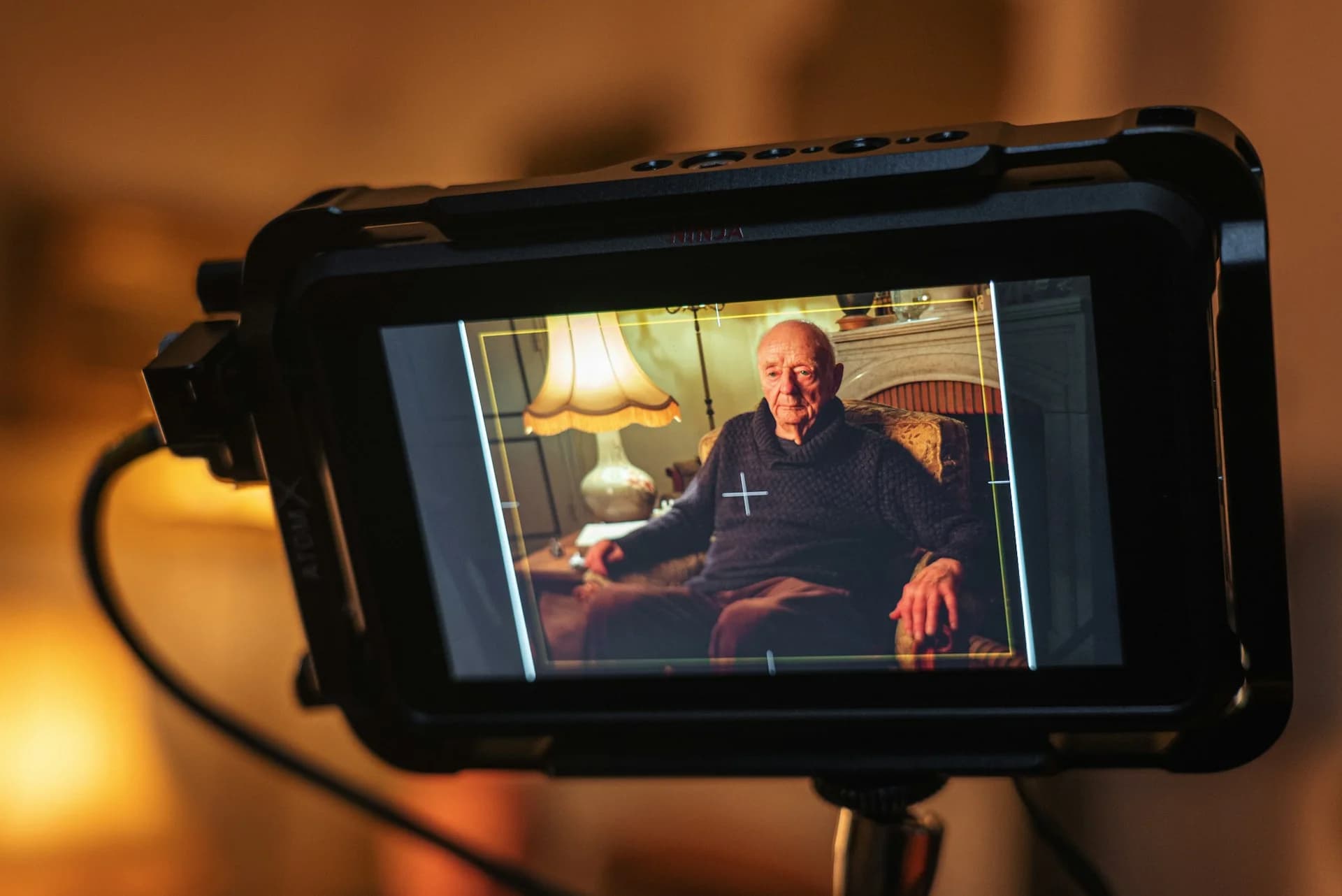
A transcript can tell you what your grandfather said about the Korean War. It can't tell you that he laughed while describing the mess hall food, or that his voice dropped when he mentioned a friend's name, or that he paused for eight full seconds before answering a question about coming home. Audio holds those details. So does video. If you're able to record the conversation, even on a phone propped against a coffee mug, do it. The facts will still be there in twenty years. The way someone told them might not be, unless you capture the actual voice.
This is also where a tool like My Family Story Vault earns its place. It's built around exactly this problem, letting a family combine recorded conversations with photos and documents in one place that every family member can add to and search later, all under one subscription rather than separate accounts for everyone involved. Everything stays private by default, visible only to the people you invite, which matters for stories that a veteran may not want sitting in public view.
Where to Go From Here
You don't need to plan the perfect interview before you sit down. You need one good question and the patience to let the answer lead somewhere. If you want a starting point built for this exact conversation, My Family Story Vault's free Story Question Generator will build you a custom list of questions for interviewing a veteran, tailored to who they are and what part of their service you want to understand better. It costs nothing, requires no account, and you can generate a new list as many times as the conversation needs one. Pull it up before your next visit, and let the questions do the work of opening the door.
Need some thoughtful, respectful questions to start with?
We've created a free Story Question tool that you can use to tailor a list of questions to ask your loved one about their life in the service without stepping on too many toes while you do it. Use and re-use as often as you like. It's free!
✨ Join thousands preserving family stories • 🔒 Secure & Private
🆓 Start Today